

Key Takeaways
- Second grade social studies asks children to sort time, place, rules, community roles, maps, and culture all at once, so mistakes can feel bigger than they really are.
- Many errors happen when a child partly understands an idea but cannot yet explain it with the right words, examples, or details.
- Calm feedback, guided practice, and one-on-one support can help your child turn social studies mistakes into stronger thinking and greater confidence.
Definitions
Social studies: In second grade, social studies usually includes communities, geography, citizenship, history, timelines, maps, and how people live and work together.
Academic feedback: Feedback is the specific guidance a teacher, parent, or tutor gives to help a student understand what was correct, what needs revision, and what to try next.
Why social studies mistakes can feel personal in second grade
If you have been wondering why 2nd grade social studies mistakes feel hard for your child, you are not alone. At this age, many students care deeply about being right, following directions, and pleasing adults. When a worksheet comes home with corrections on a map, a timeline, or a question about community helpers, the mistake can feel bigger to a 7- or 8-year-old than it looks to an adult.
Second grade social studies often seems simple from the outside because the topics are familiar. Children learn about neighborhoods, rules, leaders, landforms, holidays, and past versus present. But the thinking underneath those topics is more complex than many parents realize. Your child may need to compare ideas, notice details in pictures, read short informational passages, answer in complete sentences, and explain why something belongs in one category instead of another.
That combination can make mistakes feel frustrating. A child might know that firefighters help the community, for example, but still miss a question asking how firefighters and teachers serve people in different ways. Another child may understand that a map shows places, but mix up left and right, confuse symbols, or forget that a compass rose helps with direction. These are not signs that your child is failing. They usually show that learning is still in progress.
Teachers in elementary classrooms see this often. A student may participate well in discussion, then struggle on independent work because the task requires reading, writing, remembering directions, and organizing ideas without immediate support. That gap between what a child seems to know and what they can show on paper is one reason social studies errors can feel discouraging.
What 2nd grade social studies is really asking students to do
One useful way to understand mistakes is to look closely at the actual work of second grade social studies. In many classrooms, students are not only memorizing facts. They are building early historical thinking, map-reading habits, and civic understanding.
Your child may be expected to:
- tell the difference between past, present, and future
- put events in order on a timeline
- identify map symbols, directions, and simple grid locations
- describe how communities change over time
- explain the roles of leaders and workers in a community
- compare urban, suburban, and rural places
- recognize how rules and laws help people live together
- read short nonfiction texts and pull out key details
Each of those tasks involves several smaller skills. A timeline question, for instance, is not just about history. It may also involve sequencing, reading labels, understanding time words like before and after, and managing the visual layout of the page. A map activity may require attention to symbols, spatial reasoning, and vocabulary such as north, south, near, far, region, or border.
This is why a child can study and still make mistakes. They may understand the topic in conversation but get tangled in the skills needed to complete the assignment. In educational terms, this is common in elementary learning because knowledge and expression do not always develop at the same pace.
Parents sometimes notice this when homework sounds like, “My child knew it when we talked about it, but then missed half the page.” That pattern makes sense. In second grade, social studies work often asks children to move from oral understanding to independent academic performance. That transition can be hard, especially for children who are still developing reading fluency, handwriting stamina, or attention control.
Elementary school learning patterns that make errors feel bigger
In elementary school, children are still learning how to respond to correction. Many second graders think in very all-or-nothing ways. If they miss three questions about a community map, they may decide they are “bad at social studies” even when they understood most of the lesson. That emotional reaction is developmentally common.
There are also a few course-specific reasons social studies mistakes can sting:
- The answers can feel obvious after correction. Once a teacher explains that a mayor leads a city government or that a compass rose shows direction, the child may feel embarrassed for not seeing it sooner.
- Vocabulary matters a lot. A student may understand an idea but miss the academic word. They may know what a rule does but not choose the word law, citizen, or responsibility when the worksheet expects it.
- Pictures and text must be read together. Social studies pages often mix maps, captions, charts, and short paragraphs. Young learners can miss information if they focus on only one part.
- There may be more than one reasonable thought. In reading and discussion, a child may give an answer that makes sense but does not fully match the question. For example, saying “People need rules so they are nice” is not wrong, but the class may be learning the more precise idea that rules help keep communities safe and fair.
When this happens repeatedly, your child may begin to rush, shut down, or avoid trying. Support at this stage matters because the goal is not just fixing one worksheet. It is helping your child learn that mistakes are part of building understanding.
Where parents often see second grade social studies struggles
The mistakes that feel hardest are often very specific. Looking for patterns can help you understand what kind of support your child needs.
Timeline confusion: Your child may know family events or historical examples but mix up first, next, last, before, and after. On paper, that can lead to placing events in the wrong order.
Map-reading errors: A student might identify a park on a classroom map when talking aloud, then answer incorrectly on a worksheet because they missed the legend or confused east and west.
Community roles: Some children can name jobs but struggle to explain what those workers do for the community. They may write very short answers that do not include enough detail.
Past and present comparisons: A child may understand that schools were different long ago, but not know how to compare them clearly using examples such as transportation, tools, clothing, or communication.
Citizenship and rules: Students often know classroom rules, yet still find it hard to explain why rules matter in larger groups like towns or nations.
Reading-heavy assignments: Sometimes the challenge is not the social studies idea itself. It is reading the directions, decoding a short passage, or writing a sentence that shows understanding.
These details matter because the best support is targeted. A child who struggles with map symbols needs different practice from a child who understands maps but cannot explain answers in writing.

What helps when your child gets discouraged by social studies mistakes
Start by responding to the mistake, not the emotion alone. If your child says, “I am terrible at this,” it helps to gently narrow the problem. You might say, “This looks like a map key problem, not a whole social studies problem,” or “You knew the community helper, but the writing part needed more detail.” That kind of language teaches your child to see errors as specific and fixable.
Then use short, guided practice tied to the exact classroom skill. In second grade, a few focused minutes usually work better than a long review session.
Here are examples that fit common social studies assignments:
- For timelines: Ask your child to put three daily events in order, then explain why one came before another.
- For maps: Draw a simple map of your home or neighborhood and add a legend, labels, and directions.
- For community roles: Pick one worker and ask, “How does this person help people every day?” Encourage a full sentence with a reason.
- For past and present: Compare one object, such as a phone, school desk, or mode of travel, using then and now language.
- For rules and citizenship: Talk about one family or classroom rule and why it helps people stay safe, fair, or organized.
Specific praise also matters. Instead of saying, “Good job,” try, “You used the compass rose correctly,” or “You fixed the timeline by checking the order words.” This kind of feedback builds academic confidence because it shows your child what success looks like.
If your child often becomes upset during homework, confidence-building routines can help. K12 Tutoring shares parent-friendly ideas in its confidence building resources that connect effort, feedback, and steady progress.
When guided instruction or tutoring can make a real difference
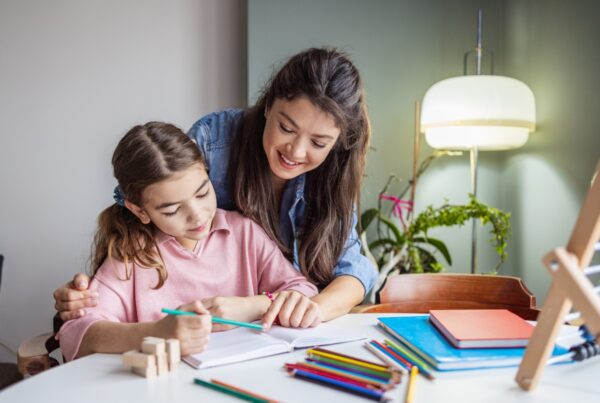
Sometimes children need more than reassurance. They need someone to slow the task down, model the thinking, and help them practice step by step. That is where guided instruction can be especially helpful in social studies.
For example, a tutor or teacher might sit with a student and say, “Let us read the question first. Now circle the words that tell us what to look for. Next, check the map key. Now tell me what the symbol means before you answer.” This type of support teaches a process, not just a correct answer.
Individualized help can be useful when your child:
- understands class discussions but struggles on independent assignments
- gets stuck on social studies vocabulary
- has trouble turning ideas into written responses
- rushes and misses details in charts, maps, and captions
- becomes unusually upset after corrections or low quiz scores
- needs repeated practice to master sequencing, geography, or civic concepts
In elementary grades, one-on-one support is often most effective when it is calm, concrete, and closely tied to classroom work. A tutor can review a returned worksheet, identify the exact misunderstanding, and provide practice that matches what your child is learning in school. That might mean sorting examples of past and present, practicing map directions with manipulatives, or rehearsing how to answer a short response with complete details.
This kind of support can also reduce the emotional weight of mistakes. When a child sees that an adult can break down the task and guide them through it, the subject starts to feel more manageable.
A parent question many families ask
Should I worry if my child cries or shuts down over social studies homework?
Usually, this is a sign that the work feels confusing, effortful, or discouraging, not that your child cannot learn the material. In second grade, emotions often rise when children care about doing well but do not yet have the tools to recover from mistakes easily.
It helps to watch for patterns. If the frustration mostly appears during map work, reading passages, or written explanations, that gives you useful information. You can then talk with the teacher about what they are seeing in class and what kind of support might help. Teachers can often tell you whether the issue is content knowledge, vocabulary, reading comprehension, pacing, or independent work habits.
If the pattern continues, extra support outside class can give your child more chances to practice without the pressure of keeping up with a whole group. That is not unusual. Many students benefit from targeted help while they are building foundational social studies habits.
Tutoring Support
K12 Tutoring supports students by meeting them where they are academically and emotionally. In second grade social studies, that can mean helping a child understand timelines, map skills, community roles, and early citizenship concepts through guided practice and clear feedback. Personalized instruction can help your child slow down, notice details, strengthen vocabulary, and learn how to explain ideas with more confidence and independence over time.
Related Resources
- How To Build Your Child’s Confidence: A Parent’s Guide – Crimson Rise
- How High-Quality, Small-Group Tutoring Can Accelerate Learning – IES (U.S. Department of Education)
- Roles in Gifted Education: A Parent’s Guide – davidsongifted.org
Trust & Transparency Statement
Last reviewed: May 2026
This article was prepared by the K12 Tutoring education team, dedicated to helping students succeed with personalized learning support and expert guidance. K12 Tutoring content is reviewed periodically by education specialists to reflect current best practices and family feedback. Have ideas or success stories to share? Email us at [email protected].